

Personality test examples : What they reveal about candidates ?
Explore personality test examples like Big Five and projective tests. Learn what each reveals to improve hiring and candidate assessment.
Fassen Sie diesen Artikel zusammen mit:

[vc_row][vc_column column_width_percent="100" gutter_size="3" back_color="color-717908" overlay_alpha="50" radius="sm" shift_x="0" shift_y="0" shift_y_down="0" z_index="0" medium_width="0" mobile_width="0" sticky="yes" width="3/12" uncode_shortcode_id="193196" back_color_type="uncode-palette"][vc_custom_heading heading_semantic="p" text_size="fontsize-180572" text_weight="500" text_height="fontheight-179065" uncode_shortcode_id="115393"]Table of Contents:1. Key Takeaways2. Objective vs. Projective Tests: The Core Difference3. Objective Personality Test Examples for Employment4. Projective Personality Test Examples5. Objective vs. Projective Tests: A Comparison for Recruiters6. Modern Innovations: The Best of Both Worlds?7. Conclusion: Making Smart Choices with Personality Test Examples8. FAQ[/vc_custom_heading][/vc_column][vc_column column_width_use_pixel="yes" gutter_size="3" overlay_alpha="50" shift_x="0" shift_y="0" shift_y_down="0" z_index="0" medium_width="0" mobile_width="0" width="8/12" column_width_pixel="800" uncode_shortcode_id="618477"][vc_empty_space empty_h="2"][vc_column_text uncode_shortcode_id="323677"]Understanding personality test questions is key to unlocking deeper candidate insights. This guide explores real-world personality test examples, from structured objective assessments like the Big Five to ambiguous projective techniques like the TAT. We'll break down what different question formats reveal, helping you make more informed and effective recruitment decisions.The landscape of personality assessment in recruitment has evolved dramatically. Today, 82% of US organisations and 78% of UK employers incorporate personality tests into their hiring processes to gain a competitive edge. Yet, the sheer variety of approaches—from structured questionnaires to projective techniques like the Rorschach inkblot test—can leave HR professionals wondering which tools provide truly meaningful insights.This guide examines the most common personality test examples, explaining what each question type reveals about a candidate's potential and how to leverage these insights for smarter hiring.
Key Takeaways
- Objective tests are scientifically validated – They use structured questions and provide reliable, standardised data to predict job performance and cultural fit.
- Projective tests are subjective and risky in recruitment – Tools like the TAT and Rorschach are difficult to standardise and pose legal risks if used in hiring.
- The Big Five model is the gold standard – It consistently predicts performance and adaptability across a wide range of roles.
- Modern platforms like AssessFirst improve candidate experience – They make assessments faster, more engaging, and still scientifically valid.
No time? Get a summary of this article:
ChatGPTPerplexityGoogle AIGrok
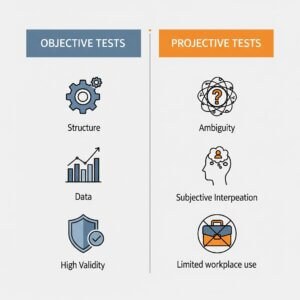
Objective vs. Projective Tests: The Core Difference
Personality tests fall into two main categories: objective and projective. Understanding this distinction is the first step in building an effective assessment strategy. For a deeper dive, see our guide on the differences between personality and psychometric tests.
- Objective Tests: Structured, fixed-response questions with high reliability and validity. Standard in recruitment.
- Projective Tests: Ambiguous stimuli eliciting open-ended responses. Rare in hiring due to subjectivity.
Objective Personality Test Examples for Employment
Objective tests provide measurable, predictive insights into workplace behaviour. Here are the most common examples.
1. The Big Five (Five-Factor Model)
The Big Five is the scientific gold standard, measuring Openness, Conscientiousness, Extraversion, Agreeableness, and Neuroticism (or Emotional Stability).
- Openness: “I enjoy trying new and different things.” → Reveals creativity and adaptability.
- Conscientiousness: “I pay close attention to details in my work.” → Reveals reliability and organisation.
- Extraversion: “I feel energised after interacting with a lot of people.” → Reveals sociability and assertiveness.
- Agreeableness: “I try to be helpful and cooperative with my colleagues.” → Reveals teamwork and empathy.
- Neuroticism / Stability: “I remain calm under pressure.” → Reveals resilience and stress tolerance.
Modern platforms like AssessFirst build on this model to predict not just traits but behaviour and job performance.
2. DISC Assessment
- Dominance: “I am direct, decisive, and take charge in group situations.”
- Influence: “I enjoy persuading others and building new relationships.”
- Steadiness: “I prefer working in a stable, predictable environment.”
- Compliance: “I focus on accuracy, quality, and following established procedures.”
Projective Personality Test Examples
Projective tests are rarely used in recruitment but remain important in psychology. Examples include:
- Thematic Apperception Test (TAT): Candidates create stories about ambiguous images, revealing underlying motives.
- Rorschach Inkblot Test: Famous but subjective, offering little validity in hiring contexts.
- Sentence Completion Tests: e.g., “When working under pressure, I…” → Provides qualitative insights into motivations and work style.
Objective vs. Projective Tests: A Comparison for Recruiters
FeatureObjective Personality TestsProjective Personality TestsFormatStructured questionsAmbiguous stimuliScoringStandardisedSubjectiveTime10–25 minutes45–90+ minutesPredictive ValidityHighLowLegal DefensibilityHighLowBest Use CaseRecruitment & developmentClinical psychology
Modern Innovations: The Best of Both Worlds?
Platforms like AssessFirst now merge scientific rigour with engaging candidate experiences. By using image-based formats, they shorten test duration and reduce fatigue while maintaining validity.
Conclusion: Making Smart Choices with Personality Test Examples
For recruitment, the clear choice is validated objective personality tests. The Big Five model provides reliable, legally defensible insights into performance and fit. Projective tests remain interesting academically but risky in hiring. Modern platforms ensure both scientific strength and candidate engagement.
FAQ
What are the most common personality test examples used in recruitment?
The Big Five is the most widely used and scientifically validated. Other examples include DISC and MBTI, though Big Five remains the gold standard.
Can you give an example of a projective personality test?
The Thematic Apperception Test (TAT) asks candidates to tell stories about ambiguous images, revealing underlying motives and traits.
What makes a good example of a personality test for employment?
A good test is scientifically validated, fair across demographics, easy to complete, and predictive of job performance and cultural fit.
Are personality tests accurate for predicting job performance?
Yes, especially with traits like Conscientiousness from the Big Five. Accuracy improves when combined with interviews and skills assessments.[/vc_column_text][vc_row_inner row_inner_height_percent="0" overlay_alpha="50" gutter_size="3" shift_y="0" z_index="0" limit_content=""][vc_column_inner width="1/1"][vc_button button_color="accent" radius="btn-circle" outline="yes" border_width="0" display="inline" css_animation="zoom-in" animation_speed="800" link="url:%2Fen%2Fbook-a-demo%2F|title:Get%20a%20demo%20of%20AssessFirst|target:_blank" button_color_type="uncode-palette" uncode_shortcode_id="348850"]Get a demo[/vc_button][vc_button button_color="accent" radius="btn-circle" border_width="0" display="inline" css_animation="zoom-in" link="url:https%3A%2F%2Fapp.assessfirst.com%2Fregister%2Fstart%3Futm_source%3Dwebsite%26utm_medium%3Dblog%26utm_content%3Dsituational-judgement-test|title:Try%20AssessFirst%20free%20for%2014%20days" button_color_type="uncode-palette" uncode_shortcode_id="161600"]Try it free for 14 days.[/vc_button][/vc_column_inner][/vc_row_inner][/vc_column][vc_column width="1/12"][/vc_column][/vc_row][vc_row][vc_column column_width_use_pixel="yes" gutter_size="3" overlay_alpha="50" shift_x="0" shift_y="0" shift_y_down="0" z_index="0" medium_width="0" mobile_width="0" width="1/1" column_width_pixel="1200"][vc_empty_space empty_h="2"][uncode_index el_id="index-983816" loop="size:3|order_by:date|post_type:post|taxonomy_count:10" auto_query="yes" auto_query_type="related" screen_lg="1000" screen_md="600" screen_sm="480" gutter_size="3" post_items="media|featured|onpost|original,title,author|sm_size|hide_qualification" single_overlay_opacity="50" single_padding="2" single_title_dimension="h5" single_title_height="fontheight-179065"][/vc_column][/vc_row]