

Interview software: challenges, tools and key features
Why take a personality test and become interested in psychology? What are the advantages for the candidate and the company?
Summarize this article with:

Traditional recruitment processes are showing their limitations: subjective evaluations, high costs in time and resources, and difficulties archiving candidate data. To address these challenges, management software dedicated to modern interviews is revolutionizing HR practices by bringing standardization, objectivity and efficiency. Thanks to artificial intelligence, these tools transform the candidate experience while optimizing recruiters' work. Discover how these cutting-edge technologies, like AssessFirst's VOICE, are redefining the rules of recruitment to build the teams of tomorrow.
Key Takeaways:
- Interview management software eliminates the subjectivity of traditional evaluations through standardized grids and objective criteria
- Automating scheduling and candidate tracking can reduce recruitment costs by 30 to 50% according to industry studies
- AssessFirst's VOICE offers asynchronous video interviews conducted by artificial intelligence with automated soft skills analysis
- Improved candidate experience is achieved through an intuitive interface, real-time notifications and process transparency
- Integration with existing HR ecosystems facilitates deployment and optimizes team adoption
- Advanced analytics enable continuous process improvement and a data-driven approach to recruitment
Current challenges of traditional recruitment interviews
Traditional interview methods present numerous limitations that impact HR team performance. Evaluation subjectivity constitutes a major challenge, with each recruiter applying their own criteria without standardized interview grids. This approach generates significant disparities in personnel evaluation and can lead to biased decisions.Time and resource costs also represent a significant obstacle. Coordinating schedules, preparing interviews and tracking candidates considerably mobilize teams. The absence of a centralized dashboard complicates employee tracking and extends recruitment timelines.Data archiving and capitalization constitute another weakness. Information collected during traditional interviews is often lost or difficult to leverage for improving future processes. This situation prevents companies from developing a data-driven approach to recruitment and limits their ability to optimize the management of their talent over the long term. It is precisely to counter these biases that solutions like AI-structured video interviews have been developed.
What is modern interview software?
Definition and key features
A modern interview software is an HR tool designed to support every step of the recruitment process. It centralizes all candidate-related information and standardizes evaluation methods to ensure fairness and objectivity in decision-making.Key features include:
- Automatic scheduling of interview slots with calendar synchronization
- Complete interview management with personalized tracking (AssessFirst's AI automatically generates an interview grid and guide tailored to the position)
- Creation of standardized and customizable evaluation templates
- Automatic generation of detailed reports and comparative analyses
- Centralization of candidate information with complete history
- Real-time tracking of each application's progress
- Automated scoring tools for skills assessment (at AssessFirst, VOICE generates an objective scorecard based on response analysis)
These management solutions allow recruiters to focus on qualitative profile analysis rather than time-consuming administrative tasks. The best software adapts to each company's specificities and meets specific management needs.
Technological evolution at the service of recruitment
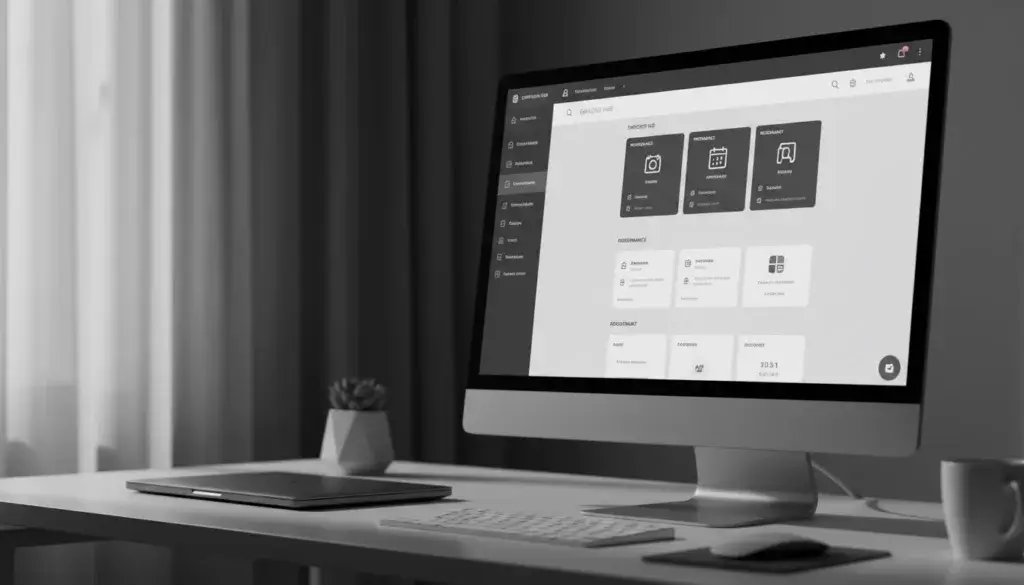
The evolution of recruitment has accelerated with the digitalization of HR processes. Companies have moved from paper-based methods to integrated HR software, offering advanced features and better traceability. Artificial intelligence now represents the new frontier of this transformation.Modern platforms offer web interfaces and mobile applications enabling flexible use. They ensure data security through ISO 27001 certifications and GDPR compliance. This technological management software allows companies to modernize their practices while meeting the strictest regulatory requirements.
Save time and gain objectivity: the benefits of interview software
Time and resource optimization
Automating scheduling processes represents a considerable time saving for HR teams. A modern interview management tool eliminates email back-and-forth and automatically synchronizes the availability of various stakeholders. This optimization significantly reduces recruiters' mental workload.Candidate information organization and storage are also improved. Automatic reminders and notifications ensure no step is forgotten in the process. This solution allows companies to schedule your interviews efficiently and handle a larger volume of applications without increasing their HR staff.
Process standardization and objectivity
Creating standardized templates constitutes a major advantage for ensuring evaluation fairness. Interview management software allows you to:
- Define uniform selection criteria for all candidates
- Configure workflows adapted to each type of position
- Fairly evaluate skills using standardized grids
- Ensure compliance with legal recruitment obligations
- Reduce decision subjectivity through objective metrics
This approach improves process transparency and strengthens candidate confidence in recruitment fairness. The right software facilitates this standardization and helps manage recruitment campaigns.
Improving the candidate experience
The candidate experience is a major stake for employer attractiveness. A modern interview software transforms this experience through several key elements:
This improvement in candidate experience directly contributes to strengthening future employees' engagement and facilitates their onboarding. To explore this dimension further, discover how to measure employee engagement from the earliest stages of recruitment.
AssessFirst's VOICE: the next generation of interview software
How does our AI conduct a structured and unbiased interview?
VOICE is revolutionizing recruitment by offering an asynchronous video interview conducted by an intelligent conversational agent. This cutting-edge technology offers several advantages:
- Complete interview standardization with predefined questions
- Structured interview guide automatically generated based on the desired profile
- Automated scorecards based on behavioral analysis
- Candidate recording and replay for in-depth evaluation
- Video-based soft skills analysis through recognition algorithms
This approach eliminates human bias while maintaining the richness of interaction. Recruiters can thus focus on analyzing results rather than conducting the interview. To understand the practical application, explore our management role-play scenarios integrated into VOICE.
Integration into the recruitment ecosystem
VOICE integrates seamlessly with other AssessFirst solutions like SWIPE, DRIVE and BRAIN to offer a comprehensive predictive approach. This ATS and CRM integration enables creating custom templates tailored to each company's specificities.Predictive modeling analyzes current employee performance to identify the most promising profiles. Talent Mapper then facilitates objective comparison of finalists. This scientific approach to recruitment transforms decision-making by relying on concrete data rather than intuition. Talent career development can thus be anticipated.
Comparison with traditional solutions
In-person interviews vs. interview software
The differences between traditional approaches and modern interview tools are substantial. Travel and team mobilization costs disappear with digital solutions. Time spent on each application decreases significantly through automation.Evaluation standardization represents a decisive advantage of video interview platforms. Automatic archiving and data analysis enable continuous process improvement. The scalability of digital solutions facilitates mass recruitment while maintaining evaluation quality. A comparison of interview software helps identify the most suitable solution based on needs.
ROI and measurable effectiveness
The return on investment of interview software is measured through several indicators:
- Recruitment cost reduction of 30 to 50% according to industry studies
- Improved hiring quality through objectified criteria
- Reduced turnover through better position-candidate matching
- Productivity gains for HR teams freed from administrative tasks
- Advanced analytics to continuously optimize your HR interviews
These metrics allow companies to justify their investment and adjust their strategies. Pricing for dedicated interview software varies according to features and company size. To maximize these benefits, it is essential to identify the best manager and conduct an effective talent review regularly.
Implementation and best practices
Deploying interview software in a company
The choice of software must be adapted to the company's size and specificities. SMEs will favor simple and quick-to-deploy solutions, while large organizations will require advanced integration features with their existing HRIS software.Needs assessment is a key step in choosing the most suitable software. Connection APIs enable smooth integration with the existing HR ecosystem. Workflow customization by company roles optimizes user adoption. This approach is part of an overall strategy of identifying employee needs and improving work organization within the company. Finding the best interview management software requires a demo request to evaluate features.
Training HR teams
Initial user training determines deployment success. Personalized support facilitates mastering the intuitive interface and accelerates adoption. Manager training on new evaluation processes ensures optimal use of features.Adoption develops progressively with practice. Teams quickly discover the software's benefits and spontaneously modify their work habits to take advantage of the new possibilities offered. One-on-one meetings with each user facilitate this transition and help track progress.
The future of recruitment with interview management software
The evolution of artificial intelligence in recruitment is moving toward a more responsible and ethical approach. Integrated equity audits ensure the absence of discrimination in automated processes. The mobile-first experience meets the expectations of new generations of candidates.Integration into a comprehensive HR strategy creates synergies between recruitment, internal mobility and talent development. Market predictions are refined through the accumulation of data on professional life cycles. This predictive approach transforms the HR function into a true strategic stakeholder within the company.Future technological innovations will include virtual reality for immersive role-play scenarios and advanced behavioral analysis. These developments will enable assessing future skills needs and anticipating organizational transformations. To support these changes, it becomes essential to develop employee skills, master internal mobility and implement talent retention strategies adapted to the new challenges of the labor market. To facilitate your search for the ideal software, Factorial offers a comprehensive management module, while AssessFirst continues to innovate to provide companies with the most powerful tools to recruit and develop the talent of tomorrow. Simplifying the process of professional interviews, 6-year reviews and annual reviews becomes possible thanks to these innovative solutions.
Summary in Questions
What is interview software and how does it work?
Interview software is an HR tool that digitizes and automates the recruitment process. It enables automatic interview scheduling, evaluation standardization with predefined grids, and centralization of all candidate information. These platforms often integrate artificial intelligence to objectively analyze responses and reduce recruitment bias. Intervention management software or maintenance software can complement the HR ecosystem depending on the company's activity.
What are the main advantages of interview software compared to traditional methods?
Dedicated interview software offers considerable time savings through automated scheduling and tracking. It guarantees evaluation objectivity with standardized criteria, reduces recruitment costs by 30 to 50%, and improves the candidate experience. Automatic data archiving also enables continuous analysis to optimize future processes. Year-end reviews and assessment of goal achievement become more efficient. Overall scores and star ratings facilitate decisions.
How is artificial intelligence revolutionizing recruitment interviews?
AI transforms interviews through conversational agents that conduct standardized video interviews, like AssessFirst's VOICE. It automatically analyzes soft skills, generates objective scorecards, and eliminates human bias. This technology enables predictive candidate evaluation based on behavioral analysis and comparison with high-performing employee profiles. This interview module brings meaning to exchanges and helps employees in their professional careers. Feedback is immediate and the output enables a personalized action plan for each employee, taking into account their aspirations and the company's objectives.Sources
- Le Figaro Économie, "Recrutement : comment l'intelligence artificielle transforme l'entretien d'embauche", 2024.
- Forbes France, "RH et IA : les logiciels d'entretien réinventent le processus de recrutement", 2025.